
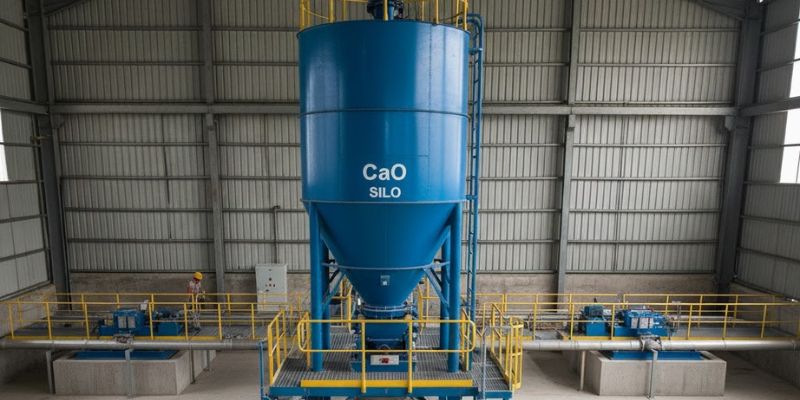
A lime dosing system is an important part of water treatment because it controls the water’s pH level, reduces its hard minerals, manages sludge, etc. Lime has lots of benefits when it is used in wastewater treatment, but it can also damage the equipment and environment. In this article, we explain what lime is and why it is used in water treatment, what its pros and cons are, and how to store, prepare, and dose it.
What Is Lime?
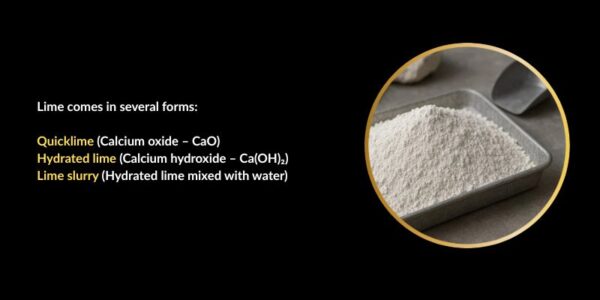
The raw limestone cannot be used in water treatment processes, so the engineers process it to create the following three lime forms.
- Quicklime (calcium oxide)
It is produced by heating limestone to a very high temperature. Heat removes carbon dioxide from the limestone and leaves calcium oxide, which is a highly reactive material. When quicklime is mixed with water, it forms hydrated lime.
- Hydrated lime (calcium hydroxide)
The process of adding water to quicklime is called “slaking”. Hydrated lime is usually used in water treatment plants and construction sites (must be mixed with cement and sand).
- Lime slurry
When hydrated lime powder is mixed with water, it becomes a thick liquid known as lime slurry or milk of lime. The pH of lime slurry is almost 12.5, so it can be used in water treatment plants, agriculture, the food industry (refining raw sugar), and construction.
In most wastewater treatment plants, hydrated lime or lime slurry is used because it is predictable, easy to store, and simple to prepare. It dissolves partially in water and provides hydroxide ions, which help increase pH and form solid particles that can be removed later in the process.
Why Is Lime Used in the Water Treatment Process?
Lime is used in the water treatment process to serve the following 4 purposes.
1. Adjusting the pH Level
When the engineers add lime to water, the calcium hydroxide reacts with acidic components (e.g., hydrogen ions) and increases the pH level. Every water treatment plant has a controller (pH probe) that monitors the water’s pH. If the pH drops suddenly, the controller activates the lime dosing system to increase it. Usually, the dosing system adds lime slurry until the pH becomes normal.
2. Softening Drinking Water
Lime can also reduce hardness (calcium and magnesium) in drinking water and improve its quality and taste. Calcium and magnesium are not harmful to health, but they can cause scale in pipes and damage the hot-water systems.
When lime is added to the water, it increases the pH level and changes the dissolved calcium and magnesium into solid particles. These particles then settle at the bottom of the clarifier basin. Softening water with lime protects pipes and equipment (makes the water less corrosive) and reduces the risk of scale formation.
3. Coagulation and Metal Precipitation
Coagulation and metal precipitation are important steps in wastewater treatment, especially when the water has dissolved metals that are difficult to remove with filters. Many metals, such as iron, aluminium, copper, and zinc, stay dissolved in water at low or neutral pH. When the pH is increased by adding lime, these metals change form and turn into solid particles. This process is called “metal precipitation”.
In water treatment plants, a coagulant (such as aluminium or ferric salt) may also be added to help the small particles settle in the clarifier tank. After settling, the clear water moves on to the next stage, while the metal-rich sludge is collected for removal.
4. Sludge Treatment
Sludge is what remains after treating the water. In almost all cases, the sludge has pathogens, produces strong odours, and is difficult to manage. Luckily, the engineers have found that lime can solve these problems and make the sludge safer for the environment.
When lime is added to sludge, it reacts with the water and raises the pH to a very high level (usually above pH 12). At this high pH, most microorganisms, including many harmful bacteria, die quickly. As a result, the sludge becomes more hygienic and produces fewer odours. Lime also changes the physical structure of the sludge and makes it thicker and drier. It is much easier to transport, store, and get rid of dry sludge cake than wet one.
Also read: Excellent Techniques for Reducing Sludge in Wastewater Plants
How Does a Lime Dosing System Work?
A lime dosing system refers to multiple equipment that inject the right dose of lime into the water at the right time. Here’s how a normal lime dosing system works:
- a) Lime storage
Lime powder is first stored in a silo or a funnel-shaped container (hopper). Then, a screw feeder or similar device transports lime from the silo into the mixing tank at the right time (for example, when the pH drops).
- b) Slaking & Mixing
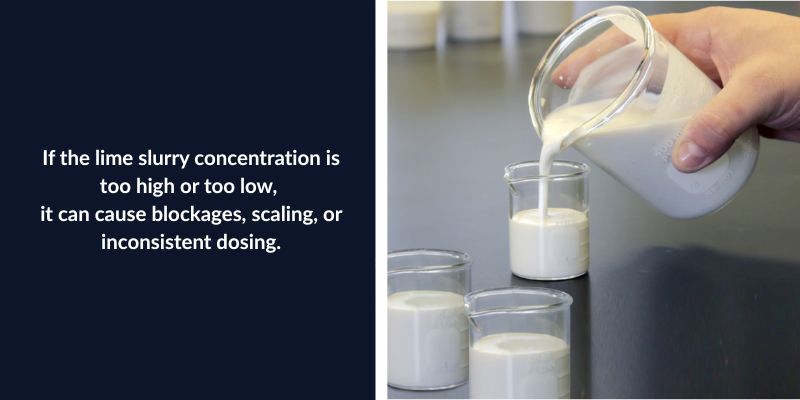
In the mixing tank, lime is mixed with water to make lime slurry. Many modern systems use a recirculating pipe loop that keeps the slurry constantly moving, so the particles do not settle at the bottom of the tank.
- c) Lime Injection
In the third step, the dosing pump (peristaltic, diaphragm, progressive cavity) injects the right amount of lime slurry into the water. All systems have a pH sensor, so when the pH drops below a certain point, the sensor opens the valve or activates the pump to inject lime. When the pH returns to the intended level, the pump slows or stops.
- d) Flushing lime
In some plants, there is a flushing system that washes the tanks and pipes after lime is injected. By doing so, the lime particles do not settle and damage the equipment.
Precautions of Using the Lime Dosing System
A lime dosing system must be carefully designed and operated to prevent serious issues. Here are some tips that the system operators must consider:
- Lime slurry is extremely abrasive, so pumps, valves, and pipes must be suitable for such material.
- Mixing tanks must move continuously to prevent settling of lime particles.
- The lime slurry must be injected at the right time so that it reacts better.
- pH probes must be cleaned and calibrated regularly. If they fail to do their job, the whole system crushes.
- Maintenance teams should find and remove scale in pipes and tanks, as lime deposits can damage the entire system.
Pros and Cons of the Lime Dosing System
Lime is widely used in water treatment plants because it has several advantages. However, it also has some drawbacks that you should know.
Advantages
It is cost-effective: Compared with other alkalis such as caustic soda, lime is much cheaper, especially when large amounts of it are required. Its low cost makes it a perfect choice for municipal plants and industrial sites where the water is in large volumes or is too acidic.
It saves the treatment plants: Acidic water damages the equipment and is harmful to humans and wildlife. When lime is added to water, it increases its alkalinity, which prevents such issues.
It helps sludge formation: Lime helps solid particles settle. In other words, it turns metals and very small suspended pollutants into removable sludge.
It improves water quality: Lime disinfects the water, reduces its odour, and removes calcium and magnesium from it (dissolved minerals). The resulting water is safe to drink and can be used for irrigation.
It is safe: Although it must be handled carefully, lime is less hazardous than many other alkali. Also, it doesn’t cause severe chemical burns, and it is easier to transport.
Disadvantages
It produces sludge: Lime produces sludge when it reacts with water. This sludge must be collected, dewatered, and removed from the plant before it damages the system. For some plants, especially the small and medium ones, this can be a challenge because the sludge lowers the plant’s capacity.
It is abrasive: Lime slurry is abrasive and can damage pumps, valves, and pipelines, so the entire lime dosing system must be abrasion-resistant (HDPE pipe or rubber-lined steel).
It scales: Lime hardens when mixed with water. If the engineers do not control systems regularly, it settles and clogs pipes and destroys the system.
Also Read: Chemical Treatment of Wastewater: 7 Critical Steps
A Quick Review
Water engineers use a lime dosing system to balance the water’s pH and manage sludge. If the lime is stored, mixed, and dosed carefully, it can be extremely beneficial for wastewater treatment plants. Some companies, like AquipTech (AIMEQUIP) in Australia, use advanced technologies to mix and dose lime in water treatment plants. Get more information about this company’s solutions and products.
FAQs about the Lime Dosing System in Water Treatment
- What form of lime is best for treating water?
Quicklime is the cheapest form of lime per ton, so it is a better option for large plants with slaking systems. Hydrated lime requires less complex equipment, so it’s best for small and medium plants.
- How do they prevent lime slurry from settling in pipes?
In most lime dosing systems, there is a pump that keeps the slurry moving around. Since the slurry is always moving, it cannot settle and harden inside the pipe. Also, the plants don’t use long, horizontal pipes with sharp corners.
- Is the lime dosing system accurate?
Yes. Modern systems use automated pH control, dosing pumps, sensors, and alarms; therefore, they are pretty accurate.
- Why do treatment plants use lime to purify water?
Lime is a cheap, abundant, and safe substance, so it’s a much better option than other chemicals. However, every kilo of lime produces one kilo of sludge (calcium carbonate or other precipitates).