
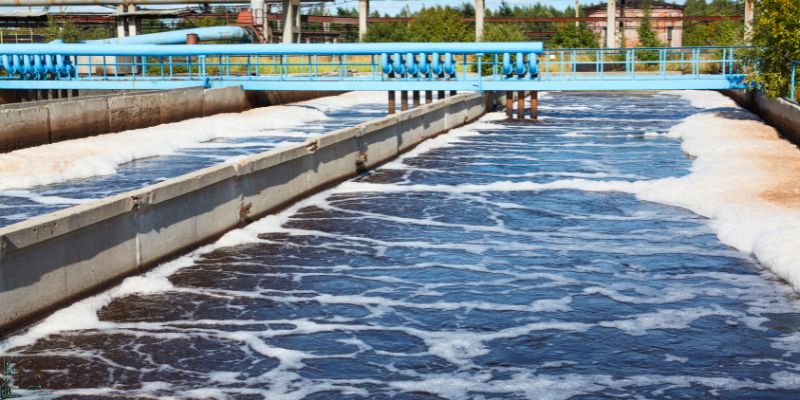
Clean water is necessary for drinking, cooking, industry, farming, etc. But sometimes the water has different types of pollutants that make it harmful for humans, plants, and animals. The most common contaminants found in water worldwide are dirt, bacteria, chemicals, salts, microscopic pollutants, and, worst of all, compounds such as pharmaceuticals (hormones and NSAIDs) and industrial chemicals.
Most of the time, traditional water treatment methods (like filtration, settling, or simple disinfection) cannot remove all these contaminants. They are sometimes very small or dissolved in the water and cannot be seen with the naked eye, so we need better treatment methods. In this article, we explain advanced water treatment technologies and how they help us have safer water and a cleaner environment.
What Is Advanced Water Treatment?
Advanced water treatment means using modern facilities and multiple steps to clean water to a much higher standard. The aim of this procedure is to remove large contaminants and microscopic ones, dissolved chemicals, nutrients, toxic materials, etc. Of course, the taste and smell of the water are also improved if it is going to be used for drinking.
In other words, imagine water passes through many filters, and each one removes a different type or size of contaminant. By doing so, the engineers make sure that if one filter misses a pollutant, the next will catch it. Depending on the water treatment plant, these layers might include:
- Physical separation (filtering larger particles, AKA gross contaminants)
- Chemical treatment (adding chemicals to balance the water’s pH, coagulate pollutants, etc.)
- Biological treatment (using helpful bacteria)
- Oxidation (breaking the organic compounds)
- Nanofiltration membranes (only let water pass)
5 Advanced Water Treatment Technologies
Here are 5 advanced water treatment technologies used in many developed countries.
a) Membrane filtration
Membrane filters are like sieves that remove pollutants from the water. Depending on the size of the particles or pollutants, one of the following 4 types of membrane filtration is used.
- Reverse osmosis (0.1 nanometer)
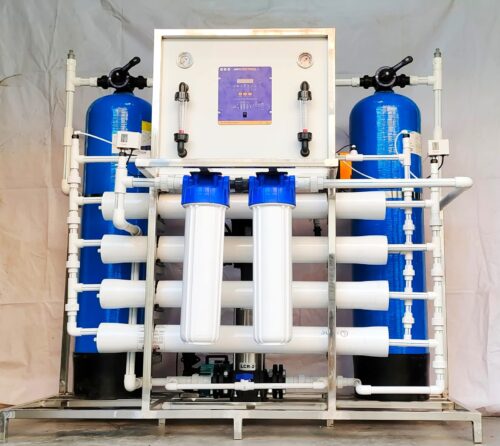
Reverse osmosis is a semi-permeable membrane that removes salts and other small contaminants from the water. In this technique, the water enters the filter with high pressure, so the salt, bacteria, and other pollutants are kept behind the membrane. The RO then creates two streams, one with clean water that can be used for drinking and irrigating the plants, and one with polluted water that should be refined again.
- Nanofiltration (1 to 10 nanometers)
Nanofiltration membranes are similar to RO, but their pores are a bit larger. It removes small organic molecules, pesticides, some salts, and dissolved metals and ions (like calcium and magnesium). In this technique, too, the water enters the system with pressure, and its impurities are trapped behind the filter. Unfortunately, the filter allows very small molecules, such as sodium and chloride, to pass through; however, it is best for removing industrial acids.
- Ultrafiltration (0.01 to 0.1 microns)
The pores in ultrafiltration are larger than in naofilters. This type of filter is used to remove small suspended solids and heavy molecules. The wastewater is pressurised and pumped into the system; otherwise, it would not pass the filter’s microscopic pores. This method requires less energy and chemicals than the others, while its output is excellent.
4. Microfiltration (0.1 to 10 microns)
This type of filter is usually used to catch large particles from the water, such as algae, dirt, and debris.
b) Adsorption and media filters
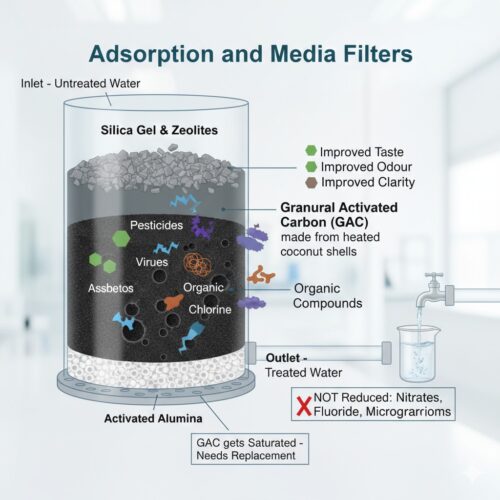
The second advanced water treatment method is adsorption. In this method, granular activated carbon (GAC), activated alumina, or other materials (like silica gel, zeolites, etc.) are used to remove pesticides, viruses, asbestos, organic compounds, and chlorine from the wastewater. GAC is made of heated coconut shells or coal and has lots of large and small pores that trap organic chemicals, taste/odour compounds, and others.
Although the adsorption and media filters improve the water’s taste, odour, and clarity, they don’t reduce nitrates, fluoride, or microorganisms in the water. Also, the activated carbon gets saturated fast and needs to be replaced.
C) Advanced oxidation processes
Some contaminants are stubborn, so it’s hard to remove or break them down. That’s where advanced oxidation processes (AOPs) are needed. AOPs are chemical and air treatment techniques that use reactive radicals (·OH) to turn organic or some inorganic pollutants into harmless products (i.e., water, carbon dioxide).
These advanced water treatment techniques are usually used when the water contains pharmaceutical residues, microplastics, endocrine disruptors, pesticides, etc. The engineers then use oxidants like ozone or hydrogen peroxide as well as UV radiation, ultrasound, or electricity to refine the water. Common AOP methods are:
- Ozone-based processes
- Photocatalysis
- Fenton and photo-Fenton processes
- Electrochemical oxidation
- Sonolysis
- A combination of AOPs with biological treatment methods (the most cost-effective)
d) Biological treatment
In wastewater treatment, biological treatment is the most cost-effective and eco-friendly method because the bacteria naturally consume organic substances or nutrients (nitrogen, phosphorus). In advanced water treatment, the engineers use biofilters or biological reactors that remove nutrients or leftover organic compounds. This helps reduce nutrients that could help algae grow faster. Note that advanced biological treatment is usually combined with other physical or chemical processes (like activated carbon or advanced oxidation processes) for better results.
e) Other advanced technologies
Besides the above-mentioned systems, there are some less-used water treatment technologies such as flow-electrode capacitive deionisation (FCDI), shock electrodialysis, and photodegradation. These eco-friendly technologies:
- Remove dissolved ions (salts)
- Desalinate water
- Filter particles
- Disinfect water
- Remove micropollutants
7 Steps of Advanced Water Treatment
Usually, the wastewater goes through the following 7 stages to have a standard quality again.
|
Stage |
Purpose |
|
Pretreatment |
Remove large debris (such as leaves, trash, cigar butts, etc.) so other equipment isn’t damaged. |
|
Physical filtration |
Remove suspended solids or smaller particles through microfiltration and ultrafiltration. |
|
Membrane filtration/desalination |
Remove dissolved salts or micro contaminants through nanofiltration or reverse osmosis (RO). |
|
Chemical/oxidation polishing |
Use advanced oxidation or chemicals to break down stubborn organic chemicals or micropollutants. |
|
Biological polishing |
Remove nutrients or remaining organics via microbial processes. |
|
Final disinfection |
Use UV, ozone, etc. to kill any remaining microorganisms or pathogens. |
| Post-treatment |
Adjust water quality (pH, hardness, taste, odour) and remove residual chemicals before reusing it. |
Benefits of Advanced Water Treatment
Advanced water treatment technologies help us in many ways. Here are some examples.
- Safer drinking water: advanced treatment helps remove chemicals, micropollutants, pathogens, etc. from the water, so it makes the water safe for drinking.
- Water reuse: treated water can be reused for irrigation, cooling industrial equipment, generating steam, or even for drinking.
- Meeting stricter regulations: day by day, the laws get stricter about water quality. Advanced methods help keep up with these standards.
- Protecting the environment: by removing nutrients (nitrogen, phosphorus) or harmful chemicals, treated water is safer to release back into rivers, lakes, or groundwater.
Challenges and Drawbacks of Advanced Water Treatment
Nothing is perfect, not even advanced water treatment technologies that keep our universe safe and livable. They have 3 challenges:
- Installing, maintaining, and replacing membranes, oxidation systems, and other equipment is costly. Also, these systems require skilled engineers and operators, whose salaries are quite high.
- High pressures and electrical or UV systems consume too much energy.
membranes can get clogged, filters need cleaning or replacement, oxidation chemicals need control, and activated carbon needs regeneration. Maintaining all these systems is time-consuming. - Some methods leave waste brine, concentrated contaminants, or chemical byproducts behind. Disposing of these sludges is hard and costly.
Also Read: Excellent Techniques for Reducing Sludge in Wastewater Plants
A Quick Review
Advanced water treatment is one step further than basic cleaning. It is a combination of seven steps that remove small, dissolved, or stubborn pollutants from the water and make it reusable. The most common water treatment technologies are membrane filtration, adsorption, chemical oxidation, and biological treatment. Although advanced water treatment is costlier and more complex, its results are marvellous. At AquipTech (AIMEQUIP), we make sure the water meets the latest standards and is healthy enough to be used for drinking and irrigation.
FAQs
- Can water treatment technologies be used for seawater?
In remote or drought-prone regions, the engineers use desalination (RO) or advanced membranes + oxidation to make seawater drinkable.
- Which membrane filtration is the best?
There is no best membrane filtration. They all serve different purposes; for example, reverse osmosis is good for removing salt and bacteria, nanofiltration is best for softening water, ultrafiltration removes larger particles like microorganisms, and microfiltration is used for removing very large pollutants.
- Can solar energy be used to treat water?
Yes. Solar Water Disinfection (SODIS) is a type of advanced water treatment that uses the sun’s UV radiation and heat to kill pathogens. This method is very eco-friendly and cheap compared to other methods.